BrentWatch.com
Brent crude oil price development. Follow the markets.
Brent Crude (Europe)
84.14 USD
▼ -4.04 %
Market Sentiment
Where will the oil price go in the next 10 days?
Brent Crude Price Development (Last 30 days)
How much is a barrel of oil
The current price of Brent crude oil as of 28.07.2026 is 84.14 USD per barrel. Compared to the previous trading day, the price has decreased by 4,04 %.
What is Brent Crude?
When the news talks about the "price of oil", in most cases (especially in Europe), they mean Brent crude. It is not oil from a single specific well, but a reference blend (benchmark) of light and sweet crude oils. The term "light" means it has a low density and is easily refined into gasoline and diesel. "Sweet" refers to its low sulfur content (less than 0.37%), making it a more environmentally friendly and cheaper raw material to process.
Brent crude serves as the price standard for roughly two-thirds of all oil traded worldwide. So, if Brent becomes more expensive, the rest of the world quickly follows suit.
Where is Brent Crude extracted?
Originally, Brent crude was extracted exclusively from the Brent oil field in the British sector of the North Sea, discovered in 1971. The name "Brent" itself came from a bird - the Brent Goose, as Shell at that time named its oil fields after waterfowl.
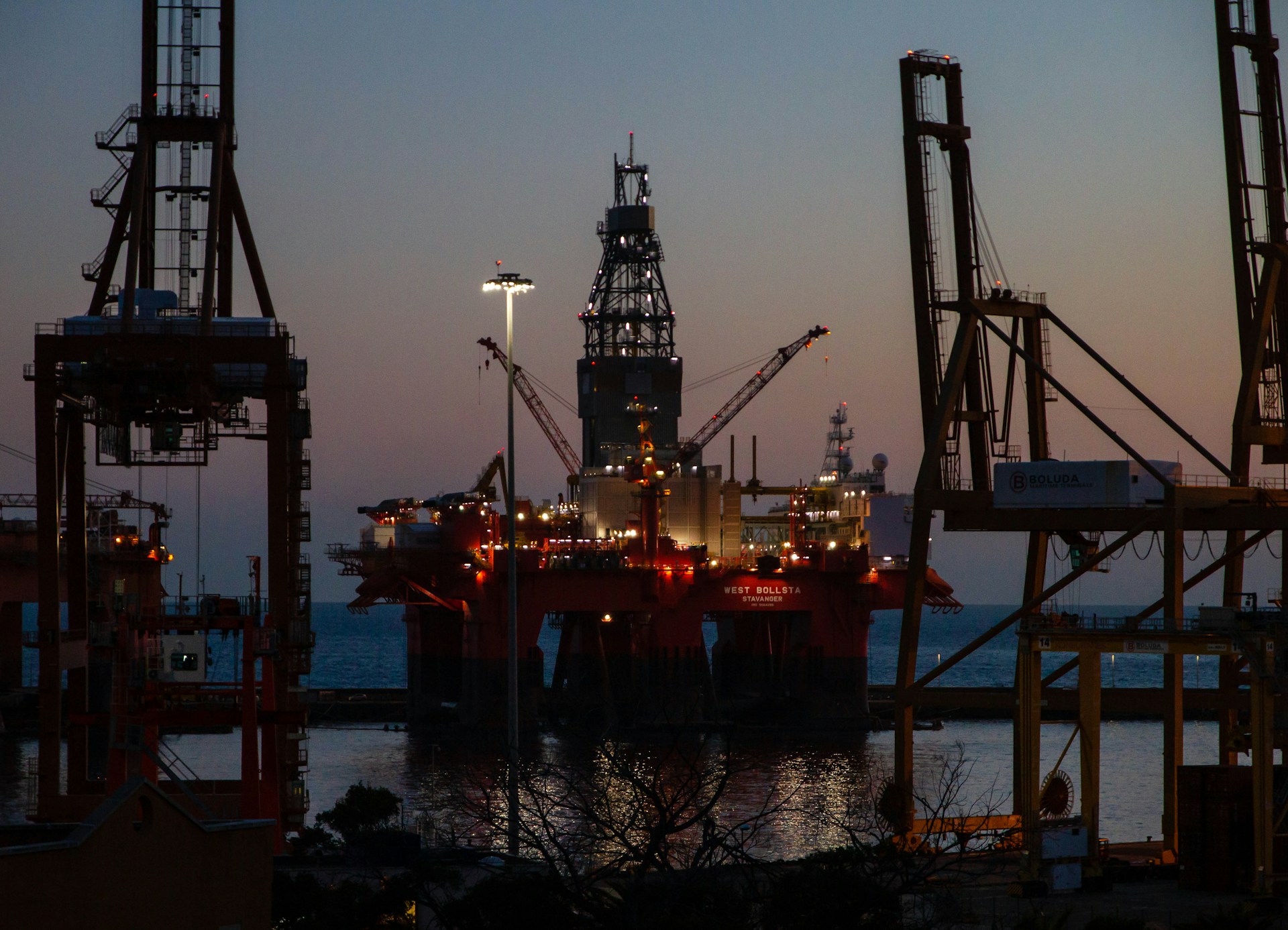
Today, the original field is essentially depleted, and therefore, a blend called BFOE is traded under the Brent designation. It comes from four main production systems in the North Sea: Brent, Forties, Oseberg, and Ekofisk (the first two are British, the latter two Norwegian). Extraction here takes place on huge offshore oil rigs, from where the raw material is transported via subsea pipelines to terminals on the mainland, or is directly pumped into giant tankers at sea.
Why does the oil price constantly fluctuate?
The price of oil is one of the most volatile indicators of the global economy. Its value is influenced by a mix of fundamental and psychological factors:
- Supply and Demand: The basic rule of economics. If the global economy grows, demand increases and the price rises. If a recession hits, the price plummets.
- OPEC and OPEC+: The Organization of the Petroleum Exporting Countries (led by Saudi Arabia) and its allies (e.g., Russia) have enormous power. They can agree to artificially cut production, creating a shortage in the market and driving the price up.
- Value of the US Dollar: Oil is traded in dollars on world markets. If the dollar weakens, oil becomes cheaper for the rest of the world, which can boost demand and thus increase its price (and vice versa).
- Market Speculation: A large part of the daily movements on the stock exchange is not made by real oil buyers (refineries), but by financial speculators and hedge funds trading in so-called futures contracts.
Long-term Brent Crude Price Development (Last year)
Oil Price Prediction
Predicting the price of oil is currently becoming one of the most complex tasks for economists and commodity market analysts. The energy market has historically been very sensitive to geopolitical shocks, but the current global situation is bringing an unprecedented level of uncertainty to the exchanges. Standard analytical models, which are usually based on fundamental data on production and demand, are reaching their limits. Radical and hard-to-predict political or military factors come into play, which can dramatically move the price of black gold within a matter of hours.
A major obstacle to any more reliable estimates of future developments is primarily the tense situation in the Middle East. A potential threat to production infrastructure or the blocking of key transport routes would inevitably lead to a sharp price increase. This already complex equation is further complicated by the difficult-to-read next steps of world powers, which keep traders in constant tension and turn long-term price predictions into a very risky speculation.
Geopolitics and Conflicts. How wars affect the market
What we sometimes see on the charts as sharp jumps is not a normal economic cycle, but a textbook geopolitical shock. Tensions in the Middle East, local wars, or threats of attack are a nightmare for the oil markets.
The key point is the Strait of Hormuz. It is the most critical maritime chokepoint in the world. Approximately 20 to 30% of the world's daily oil consumption passes through this bottleneck. Any threat of mining the strait, drone attacks on tankers, or a direct military blockade causes absolute panic in the markets. Refineries fear they will not get their oil and are therefore willing to pay huge premiums for immediate deliveries from safer areas.
Brent vs. WTI
On charts, you often see the value of WTI (West Texas Intermediate) alongside Brent. What's the difference? While Brent is the European standard extracted at sea, WTI is the American standard. It is primarily extracted on land in Texas, Louisiana, and North Dakota. WTI is even lighter and sweeter than Brent. Its price is usually a few dollars lower than Brent's because WTI is tied to onshore supplies and is influenced by local demand in the US and the capacity of its pipelines.